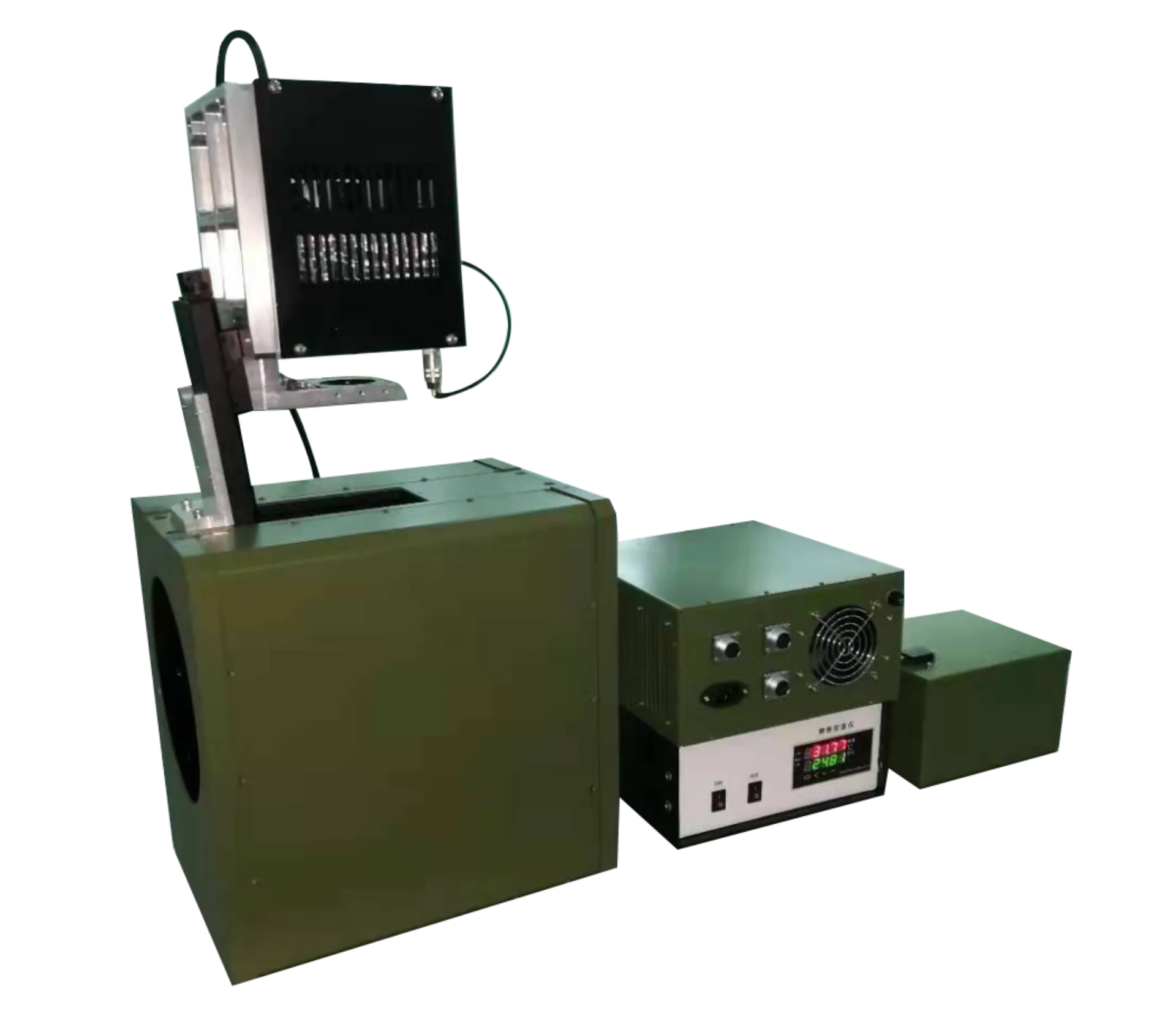
Design Principles and Applications of Off-Axis Reflective Collimators
Date Published: 2022-10-11 08:46:53
Principles and applications of off-axis reflective collimators: Due to fewer material constraints in reflective systems, they are suitable for lightweight design, have no chromatic aberration, and high system transmittance; off-axis systems have no central obscuration, and the focal point is directed outside the primary mirror, allowing the optical path to be folded and reducing system volume. Therefore, off-axis reflective structures are widely used in the design of collimators.
The main function of a collimator is to generate parallel light to simulate infinitely distant targets, and it is a high-precision optical instrument commonly used for testing optical systems. As the requirements for tested optical systems become increasingly stringent, collimators are also developing towards larger apertures and longer focal lengths. Therefore, off-axis reflective collimators, with their advantages of small volume, compact structure, large aperture, long focal length, and no central obscuration, have become a research hotspot. The use of aspheric surfaces in off-axis reflective collimators is a very effective method to achieve better imaging quality.
Off-axis reflective collimators are mainly used in optical instruments for optical axis alignment of optical systems. These instruments have advantages such as large measuring apertures and wide spectral ranges, making them specialized instruments for multi-optical axis alignment of optical instruments. They can be primarily used for aligning the parallelism of optical axes between laser optical axes, television optical axes, and visual optical axes. With other accessories, they can also be used to measure other parameters of optical systems.